
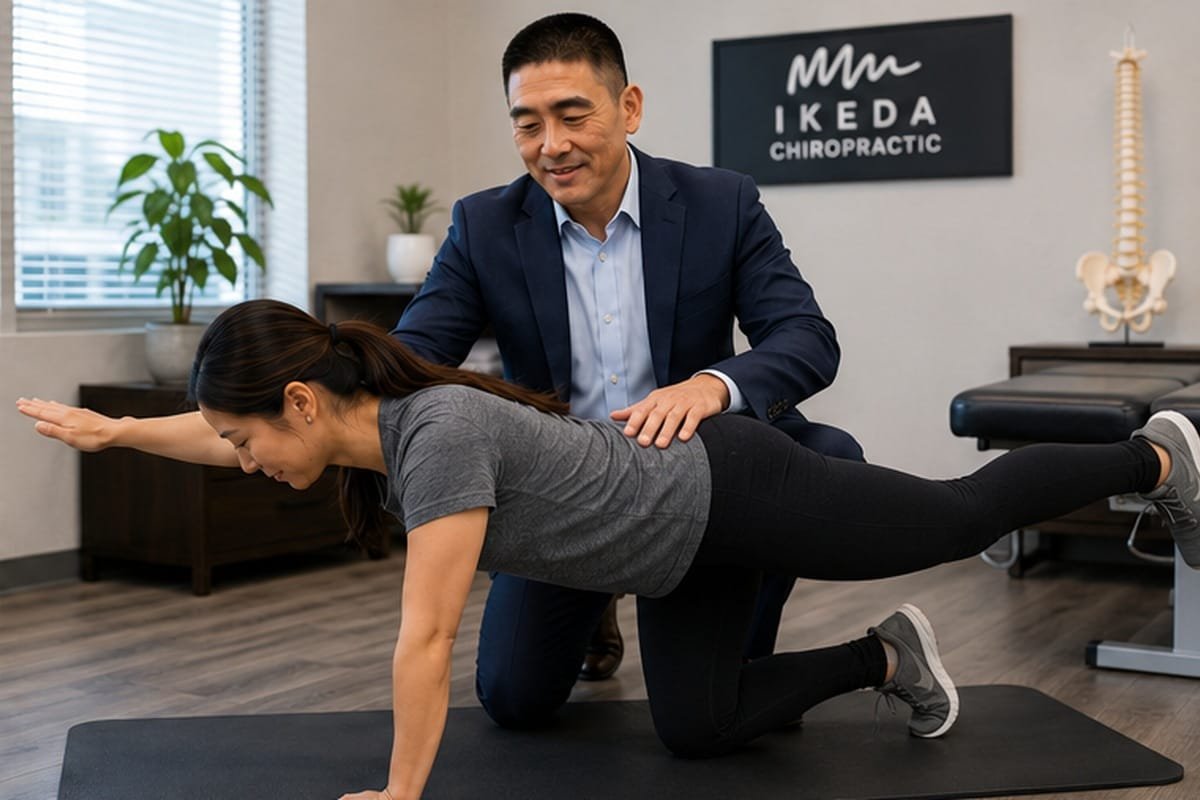
What are therapeutic exercises in chiropractic care?
Therapeutic exercises are purposeful movements selected to address individual movement or functional goals. Depending on the patient's evaluation, they may focus on mobility, flexibility, strength, coordination, posture, balance, or movement quality. Therapeutic exercise may be used alongside other chiropractic services rather than replacing an individualized evaluation.
Chiropractic care is often associated with hands-on treatment, but manual therapy is not the only approach that may be included in a care plan.
The National Center for Complementary and Integrative Health notes that chiropractic treatment may also include exercise in addition to manual therapy.
That makes therapeutic exercise an important topic for patients who want to understand how movement-based care may complement chiropractic care in Torrance, CA .
Unlike a general fitness routine, therapeutic exercises are selected with a particular movement or functional objective in mind. The specific exercises, amount of movement, and progression should depend on the individual rather than following a universal program.
What Are Therapeutic Exercises?
Therapeutic exercises are structured movements used with a specific functional or movement goal in mind.
They differ from a general workout because the exercise selection can be based on information gathered during a consultation and physical evaluation.
Broad Fitness Goals
General exercise may focus on overall fitness, physical activity, endurance, strength, or recreation.
Individual Movement Goals
Therapeutic exercise is selected to address a particular movement, mobility, strength, coordination, or functional objective.
The exercise itself does not need to be complicated. What matters is why the movement is being used, how it is performed, and whether it is appropriate for the individual.
What Can Therapeutic Exercises Focus On?
Exercise selection can vary substantially from one patient to another. Depending on the evaluation and goals, therapeutic exercise may focus on one or several aspects of movement.
Mobility
Controlled movement may be used to work on comfortable motion through an appropriate range.
Flexibility
Selected movements may be used to address flexibility when appropriate for the patient's needs.
Strength
Progressive resistance or body-weight movements may be considered to support muscular strength.
Coordination
Some exercises may focus on control, timing, balance, or coordination during movement.
Posture
Exercise can be used to build awareness of positioning and movement habits where appropriate.
Movement Quality
Guided movement may help a patient practice performing an activity with greater control.
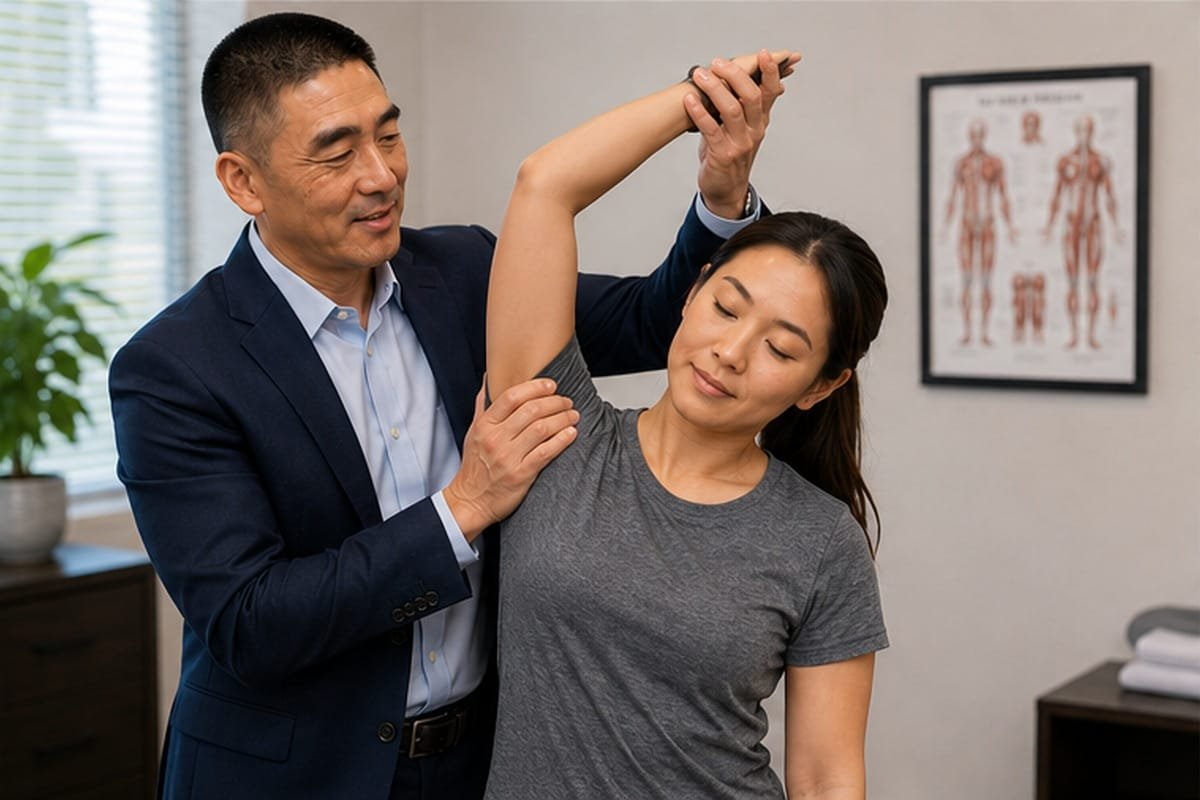
How Can Therapeutic Exercises Complement Chiropractic Care?
Chiropractic care may involve several approaches rather than relying exclusively on one type of treatment.
NCCIH notes that exercise may be used as part of chiropractic treatment alongside manual therapy. Exercise and hands-on care serve different purposes, so they should not be treated as interchangeable.
For example, a hands-on technique may be used when appropriate for joint movement, while exercise may give the patient an active movement task to practice.
Depending on the patient's care plan, therapeutic exercises may also be considered alongside joint manipulation and mobilization or therapeutic modalities .
Why Therapeutic Exercises Should Be Individualized
The fact that an exercise is useful for one person does not mean that the same movement, resistance, range, or repetition is appropriate for everyone.
Individual exercise guidance can take into account relevant health history, movement findings, current activity level, limitations, previous injuries, goals, and how a person responds to the movement.
This is one reason a new patient consultation and chiropractic evaluation can be important before recommendations are made.
Mobility, Flexibility and Strength Are Different
Patients sometimes use the words mobility, flexibility and strength interchangeably, but they describe different aspects of physical function.
A therapeutic exercise plan may address more than one of these areas depending on the individual patient's needs.
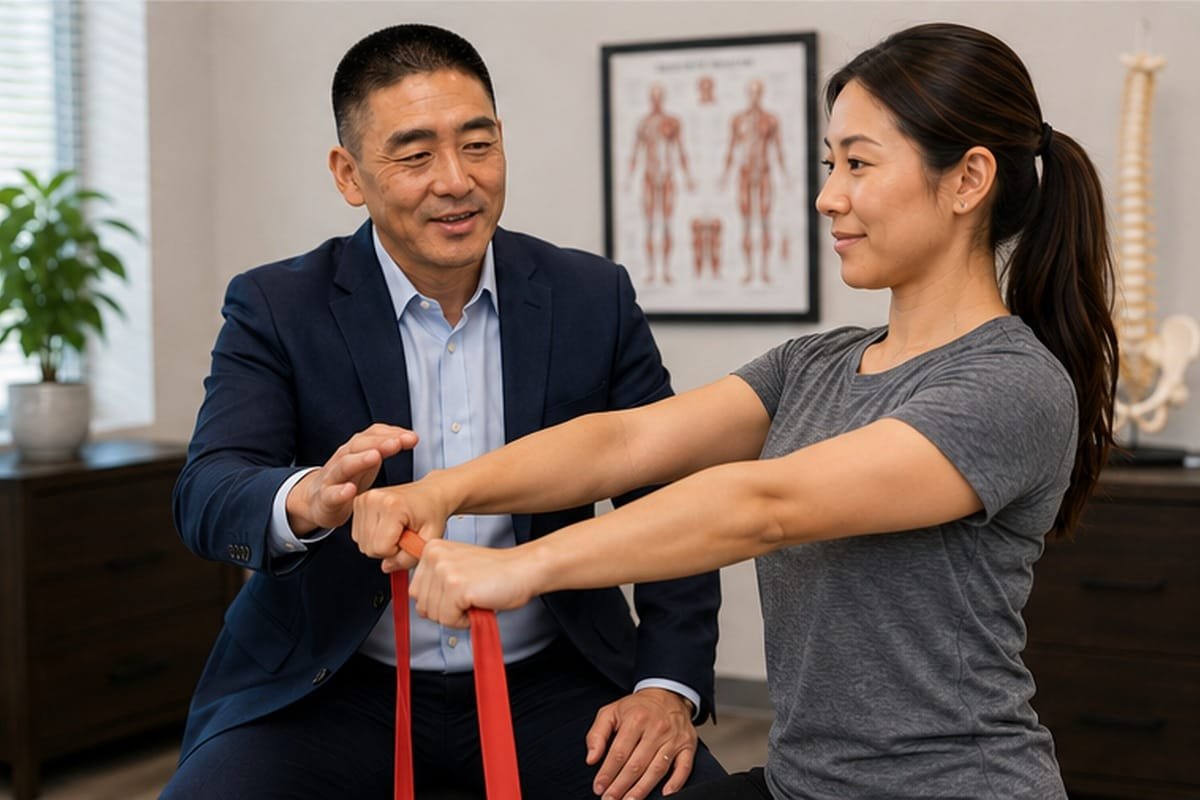
Why Exercise Progression Matters
Therapeutic exercise is not only about which movement is selected. The amount of challenge also matters.
An exercise can potentially be modified by changing the range of motion, resistance, number of repetitions, duration, balance demand, speed, or complexity.
A movement that is appropriate at one stage may later become too easy, while an exercise that is initially too difficult may need to be simplified.
Assess
Identify the movement or functional objective.
Select
Choose an appropriate exercise or movement.
Practice
Perform the movement with appropriate technique and control.
Reassess
Review response and adjust the exercise when appropriate.
What About Therapeutic Exercises at Home?
Home exercises can make movement practice more convenient, but patients should understand what they have been asked to do before performing an exercise independently.
Before doing an exercise at home, understand:
- Which movement you are supposed to perform
- The intended purpose of the exercise
- The appropriate range of motion
- How many repetitions or how much time is recommended
- Whether resistance should be used
- What should cause you to stop and contact the clinic
- When the exercise should be progressed or changed
If an exercise causes unexpected or concerning symptoms, stop and contact an appropriate healthcare professional rather than simply increasing the intensity or continuing through the problem.
Questions to Ask About Therapeutic Exercises
Understanding the purpose of an exercise can make it easier to perform the movement correctly and recognize when guidance may need to be updated.
Ask whether the goal involves mobility, strength, flexibility, coordination, posture, or another movement objective.
Ask what normal effort or sensation may be expected and what should prompt you to stop.
Make sure you understand the recommended frequency, repetitions, duration, or resistance.
Ask how progress will be assessed and when the exercise may need to be modified.
Therapeutic Exercises at Ikeda Chiropractic
Ikeda Chiropractic is located at 17625 Crenshaw Boulevard, Suite 101, Torrance, CA 90504 .
Dr. Cliff Ikeda, D.C. provides chiropractic consultations, evaluations, X-rays when appropriate, joint manipulation and mobilization, therapeutic modalities, and therapeutic exercises.
Exercise guidance may be considered based on individual movement findings and goals rather than using the same routine for every patient.
Continue Learning
Therapeutic Exercise FAQs
What are therapeutic exercises in chiropractic care?
Therapeutic exercises are purposeful movements selected to address individual movement or functional goals. Depending on the patient, they may focus on mobility, flexibility, strength, coordination, posture, or movement quality.
Are therapeutic exercises the same as a regular workout?
Not necessarily. A general workout typically focuses on overall fitness, while therapeutic exercise is selected for a particular movement or functional objective.
Can chiropractors recommend exercises?
Exercise may be included as part of chiropractic treatment. The specific exercise recommendations depend on the practitioner's evaluation and the patient's individual situation.
Do all chiropractic patients receive the same exercises?
No. Exercise selection can vary based on health history, movement findings, current activity, goals, limitations and other individual considerations.
Can therapeutic exercises be performed at home?
Some exercises may be suitable for home practice when the patient understands the technique, intended purpose, recommended amount, and when to stop or seek additional guidance.
Where can I ask about therapeutic exercises in Torrance, CA?
Ikeda Chiropractic is located at 17625 Crenshaw Boulevard, Suite 101, Torrance, CA 90504. You can request an appointment online or call 310-771-0881 .
Sources & Further Reading
Chiropractic: In Depth — general information about chiropractic evaluation, manual treatment and exercise.
View NCCIH Chiropractic Information →Physical Activity Guidelines for Americans — evidence-based national guidance on physical activity and muscle-strengthening activity.
View Current Physical Activity Guidelines →